0台
设备数量
0人
员工数量
0件
日均产能
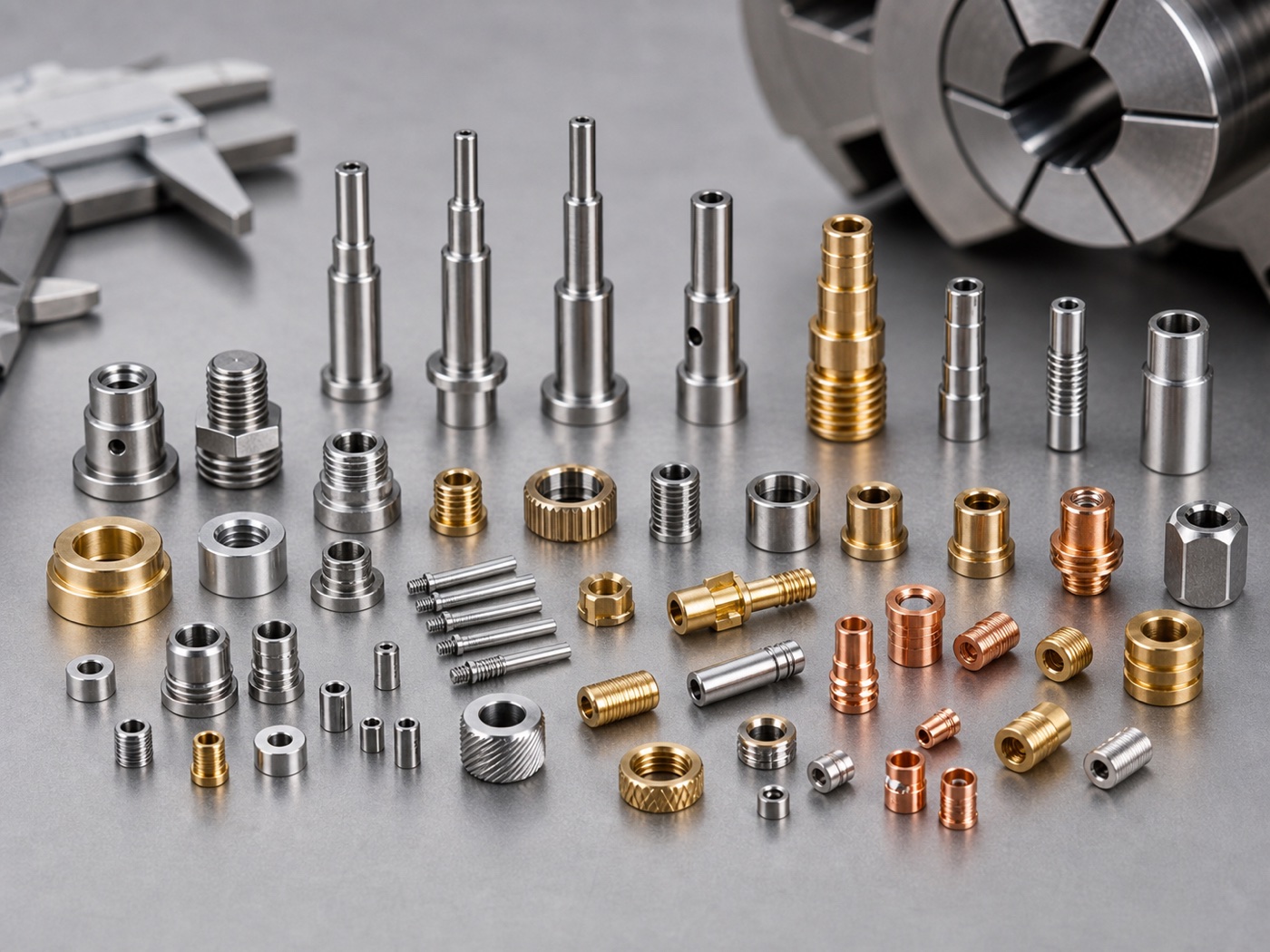
提供EDC定制设计图纸,支持DWG、STP文件或产品样品邮寄
根据定制数量、材质和复杂度,快速给出单价报价
确认定制款式、材质、尺寸、交货时间以及其他特别要求
开始生产EDC定制产品,使用先进的加工设备确保精确度与质量
按客户要求进行品质检测,包装定制产品并安排物流发货
提供全程售后跟踪,确保客户使用体验与产品质量无忧
The Institute for Supply Management (ISM) reported on June 1, 2026, that the Manufacturing PMI® registered 54 percent in May, a 1.3 percentage point increase from April's reading of 52.7 percent and its highest level since May 2022 (55.9 percent). This marks the fifth consecutive month of expansion in the manufacturing sector, raising optimism across the global precision machining and metalworking supply chain.
The May 2026 ISM Manufacturing PMI report, chaired by Susan Spence of the ISM Manufacturing Business Survey Committee, reveals several critical trends:
According to Susan Spence, the May survey panel revealed that "the Iran war was mentioned in 42 percent of comments, and tariffs in 18 percent; 57 percent of the panelists mentioned pricing volatility as an issue for their companies." These geopolitical factors continue to influence supply chain decisions and raw material costs across the metalworking industry.
The United States S&P Global Manufacturing PMI also reported strongly, with the May flash reading coming in at 55.3, significantly above both the forecast of 53.8 and the previous month's 54.5. The combination of the ISM and S&P Global surveys paints a picture of accelerating manufacturing activity.
Complementing the PMI data, the Association for Manufacturing Technology (AMT) reported on June 8, 2026, that new orders of metalworking machinery in the US totaled $593.6 million in April. While this represented a 12.5 percent sequential decline from March's $681.3 million, it marked a 33.2 percent increase year-over-year compared to April 2025.
Year-to-date through April 2026, manufacturing technology orders have reached $2.19 billion — a 28.9 percent increase over the same period in 2025. This sustained investment in CNC machinery and metalworking equipment signals strong confidence among manufacturers in the demand outlook for precision-machined components.
The first quarter of 2026 was especially robust, with manufacturing technology orders totaling $1.61 billion, up 27.8 percent year-over-year. March 2026 alone saw $681.3 million in orders, increasing 40.3 percent from February and 31.5 percent from March 2025, according to AMT's Christopher Chidzik.
The positive momentum extends beyond US borders. The J.P.Morgan Global Manufacturing PMI compiled by S&P Global rose to 52.6 in April 2026, up from 51.3 in March — its highest level in over four years (since March 2022). The headline PMI has remained above the neutral 50.0 mark for nine successive months.
Key country-level PMI readings (April 2026 data):
China's official NBS Manufacturing PMI edged down to 50.0 in May 2026 from 50.3 in April, with new orders shrinking (49.9 vs 50.6) and foreign orders declining (48.6 vs 50.3). Output growth eased to a three-month low at 51.2. Input cost inflation moderated but remained elevated at 60.5.
The strong US manufacturing data is occurring against a backdrop of accelerating nearshoring and reshoring activity. A Bain & Company survey found that over 80 percent of large manufacturers plan to shift supply chains closer to their end markets. Mexico has now surpassed China as the United States' top trading partner, a historic shift in North American supply chain dynamics.
A peer-reviewed study published in the European Journal of Political Economy (Volume 93, June 2026) by researchers Ando, Hayakawa, Kimura, and Mukunoki provides quantitative evidence of increasing reliance on political friend-shoring and recent progress in reshoring amid heightened geopolitical risks. The study found that the degree of friend-shoring dependence is "consistently most substantial for Factory America," while political motivations remain relatively less pronounced for Factory Asia.
For precision CNC machining companies serving international markets, these trends create both opportunities and challenges. The reshoring wave is generating new demand for domestic and nearshore machining capacity, while simultaneously creating competitive pressure on pricing and delivery lead times.
According to a January 2026 report in Quality Magazine by Kelly Aulenback, the metalworking industry is rapidly embracing AI to address its persistent labor shortage — the Manufacturing Institute estimates 3.8 million manufacturing jobs will need to be filled by 2033, with 1.9 million expected to remain vacant. Over 84 percent of manufacturing leaders are accelerating adoption of digital technologies, and 80 percent are investing 20 percent or more of their improvement budgets into smart manufacturing initiatives.
AI is being deployed across CNC machining operations to upskill existing workers, optimize toolpaths, predict maintenance needs, and improve first-pass yield — all critical for metalworking job shops seeking to remain competitive in the current expansion cycle.
The combination of strong US PMI data, accelerating capital investment in CNC machinery, global manufacturing expansion, reshoring momentum, and AI-driven productivity improvements creates a favorable environment for precision machining companies in 2026. However, elevated input prices (ISM Prices Index at 82.1), supply chain tightness (Supplier Deliveries at 60.6), and ongoing geopolitical uncertainty (the Iran conflict cited by 42% of survey panelists) remain significant risk factors.
US precision machining market is projected to reach $23.07 billion in 2026, driven primarily by aerospace demand for tight-tolerance titanium and Inconel components. Suppliers with AS9100D, ISO 9001, and multi-axis CNC capabilities are best positioned to capture this growth.
Key Takeaways for CNC Machining Buyers and Suppliers:
Data sources: Institute for Supply Management (ISM), S&P Global, Association for Manufacturing Technology (AMT), J.P.Morgan Global Manufacturing PMI, Trading Economics, Bain & Company, European Journal of Political Economy. This report is compiled by Dongguan Stirlingte Metal Products Co., Ltd. — your partner for high-precision CNC machining services.
Need precision CNC machining for your next project? We support global delivery with competitive lead times.
本文参考《金属材料百科》权威资料,详细解析C21000(黄铜)的性能特点和加工要点。铜合金因其优异的导电导热性能和耐腐蚀性,在电气、机械、船舶等领域广泛应用。
C21000,俗称黄铜是一种常用的铜合金材料,具有良好的导电性、导热性和耐腐蚀性能。
| 元素 | 含量 (%) |
|---|---|
| 铜 (Cu) | 60-63 |
| 锌 (Zn) | 余量 |
| 铁 (Fe) | ≤0.15 |
| 铅 (Pb) | ≤0.08 |
| 性能指标 | 数值 |
|---|---|
| 抗拉强度 | ≥330 MPa |
| 屈服强度 | ≥160 MPa |
| 延伸率 | ≥35% |
| 硬度 | ≥80 HB |
| 密度 | 8.4 g/cm³ |
C21000在以下环境中表现出色:
C21000的 CNC 加工特点:
市场价格参考:
东莞斯特林特金属制品有限公司专业提供C21000材料 + CNC 加工一站式服务:
免费报价咨询,欢迎联系我们!
最新数据显示,06月日本制造业 PMI 为50.8,较上月上升,显示制造业持续扩张。
日本制造业 PMI:50.8(上月:50.2)
PMI 数据显示日本制造业需求旺盛,对金属零件采购意愿增强。
受全球供应链调整影响,日本本土制造业面临挑战与机遇并存的局面。
作为日本市场供应商,我们建议:
数据来源:au Jibun | 整理:东莞斯特林特金属制品有限公司
专注日本市场 CNC 加工服务,欢迎询盘!
最新数据显示,06月印度制造业 PMI 为57.5,较上月上升,显示制造业持续扩张。
印度制造业 PMI:57.5(上月:56.8)
新订单指数高于荣枯线,预示未来印度市场需求将保持增长。
受全球供应链调整影响,印度本土制造业面临挑战与机遇并存的局面。
作为印度市场供应商,我们建议:
数据来源:Nikkei | 整理:东莞斯特林特金属制品有限公司
专注印度市场 CNC 加工服务,欢迎询盘!
本文参考《金属材料百科》权威资料,详细解析C18150(铬锆铜)的性能特点和加工要点。铜合金因其优异的导电导热性能和耐腐蚀性,在电气、机械、船舶等领域广泛应用。
C18150,俗称铬锆铜是一种常用的铜合金材料,具有良好的导电性、导热性和耐腐蚀性能。
| 元素 | 含量 (%) |
|---|---|
| 铜 (Cu) | 60-63 |
| 锌 (Zn) | 余量 |
| 铁 (Fe) | ≤0.15 |
| 铅 (Pb) | ≤0.08 |
| 性能指标 | 数值 |
|---|---|
| 抗拉强度 | ≥330 MPa |
| 屈服强度 | ≥160 MPa |
| 延伸率 | ≥35% |
| 硬度 | ≥80 HB |
| 密度 | 8.4 g/cm³ |
C18150在以下环境中表现出色:
C18150的 CNC 加工特点:
市场价格参考:
东莞斯特林特金属制品有限公司专业提供C18150材料 + CNC 加工一站式服务:
免费报价咨询,欢迎联系我们!


扫一扫添加微信